


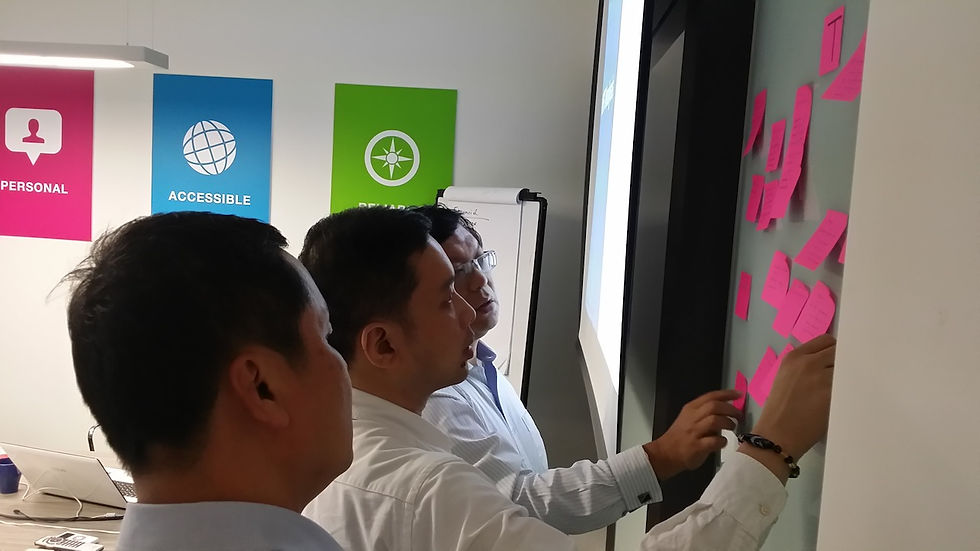
OBJECTIVES & KEY RESULTS (OKR) workshop
Translating Aspirations into Action.
Description
In today’s fast-paced business environment, organizations often struggle to bridge the gap between high-level strategy and daily execution. Objectives and Key Results (OKRs) is a powerful goal-setting framework used by the world’s leading companies—including Google, Intel, and Adobe—to drive alignment, focus, and transparency across all levels of the organization. By defining clear, ambitious objectives and measurable key results, organizations can transform their strategic vision into disciplined action and high-impact performance.
As part of the Lean Thinking Framework, this one-day workshop provides a comprehensive guide to implementing OKRs. Participants will learn how to set a few vital objectives, define precise metrics for success, and establish a continuous cycle of tracking and adjustment. The program emphasizes the "OKR Superpowers"—Focus, Alignment, Tracking, and Stretching—to foster a results-driven culture that encourages innovation and accountability.
Through interactive sessions and real-world case studies, leaders will gain the skills to move beyond traditional, rigid goal-setting toward an agile, adaptive system that accelerates collective success.


Who Should Attend
This workshop is designed for individuals responsible for strategic execution and performance management, including:
-
Senior leaders and executives seeking to drive organizational transformation and growth.
-
Department managers and team leads aiming to align their teams with corporate priorities.
-
Business improvement professionals and Lean/CI practitioners facilitating strategy deployment.
-
Individual contributors who want to understand their impact and contribute to high-priority goals.
Training Methodology
-
Interactive lectures and video presentations.
-
Group activities and icebreaker challenges focused on goal-setting obstacles.
-
Template-driven planning sessions using the OKR Template.
-
Case study analysis of industry leaders such as Google, Intel, and YouTube.
-
Q&A and peer sharing of best practices and common pitfalls.
Learning Objectives
By the end of this course, participants will be able to:
-
Acquire knowledge on the key concepts and principles of OKRs.
-
Define the OKR process and its use as a framework for transparency and accountability.
-
Understand the importance of setting clear, measurable objectives and key results for alignment.
-
Describe the OKR approach to setting quarterly objectives, defining measurable outcomes, and tracking progress.
Workshop Outline
1. Key Concepts and Principles of OKRs
-
The need for change: Traditional goal-setting vs. OKRs.
-
The OKR Mindset: From chaos to clarity.
-
The Four OKR Superpowers: Focus, Align, Track, and Stretch.
-
Resource alignment for adaptive agility.
2. Defining OKRs with Precision
-
Understanding Objectives (The "Whats") and Key Results (The "Hows").
-
Criteria for strong, high-impact objectives.
-
Defining measurable key results: Quantitative vs. Qualitative.
-
Committed vs. Aspirational OKRs.
3. The OKR Process and Structure
-
The Continuous OKR Cycle: STAR (Set, Track, Adapt, Review).
-
OKR Deployment: Top Management, Teams, and Individuals.
-
Integrating strategic direction with tactical execution.
-
The typical quarterly OKR cycle.
4. Scoring and Measuring Success
-
The OKR scoring system overview (0.0 to 1.0).
-
Interpreting scores: Red, Yellow, and Green zones.
-
The scoring process and leadership feedback loops.
5. Best Practices and Comparisons
-
Comparing OKRs with MBOs, KPIs, SMART goals, and Balanced Scorecards.
-
Mistakes and traps in OKR writing.
-
OKR best practices for senior leaders.
6. Building a Continuous Improvement Culture
-
The role of CFRs: Conversations, Feedback, and Recognition.
-
Moving from annual reviews to continuous performance management.
-
Leadership's role in fostering transparency and trust.
7. Case Studies and Implementation
-
Real-world examples: Google, Intel, YouTube, Adobe, and the Gates Foundation.
-
Common challenges and practical solutions.
-
Implementing OKRs: Starting small and driving engagement.
Award of Certificate
Certificate of Attendance will be issued to participants who have attended at least 75% of the workshop
Duration
One day