


PROJECT PLANNING TRAINING COURSE
Plan with Purpose. Execute with Confidence. Deliver with Impact.
Description
Effective project planning is the backbone of every successful improvement initiative. This course equips participants with the structured thinking and practical tools to plan and manage projects of any size, across industries and methodologies. Updated for 2026, it includes dedicated coverage of Agile and Hybrid Project Management, ensuring participants can balance structured planning with adaptive execution.
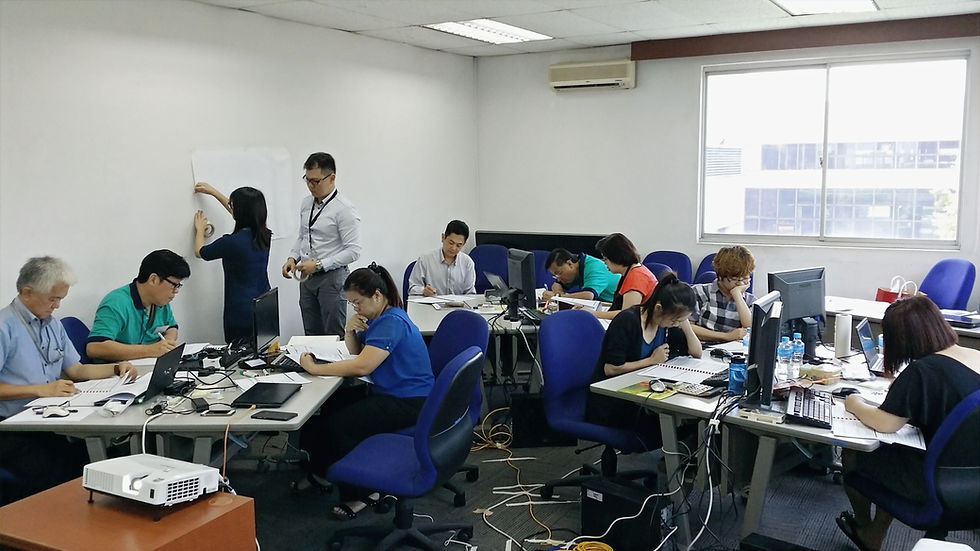
Highly practical and outcome-driven, the programme applies each concept through case studies and culminates in a capstone exercise where participants develop a complete project plan for a real project from their own organisation.


Who Should Attend
-
Lean practitioners, Kaizen facilitators, and continuous improvement professionals
-
Design Thinking and innovation project leaders
-
Managers, team leads, and supervisors delivering projects or change initiatives
-
Business analysts and functional specialists contributing to projects
-
HR and L&D professionals driving organisational change or workforce development
-
First-time project leaders seeking a solid foundation
Training Methodology
The course is interactive and practice-oriented. Participants will:
-
Apply concepts through structured case study exercises
-
Work in teams to compare outputs and consolidate learning
-
Analyse real planning scenarios to connect theory with practice
-
Produce a complete project plan for their own organisation
-
Receive feedback and coaching to sharpen application
Learning Objectives
By the end of the course, participants will be able to:
-
Define project scope, goals, stakeholders, deliverables, and constraints
-
Build a Work Breakdown Structure (WBS) using MECE thinking
-
Map task dependencies, identify the critical path, and construct Gantt charts
-
Develop people management and communication strategies for alignment
-
Identify and respond to risks using structured tools and contingency planning
-
Apply traditional, Agile, or hybrid project delivery approaches effectively
-
Integrate project planning disciplines with Lean, Kaizen, and Design Thinking
Course Outline
Session 1: Start-Up — Defining the Project
-
Clarify project scope, stakeholder needs, goals, and constraints using a structured framework.
-
Apply SMART goal setting and avoid vague “NG words” that weaken project definition.
-
Connect scope definition to Design Thinking, Lean Thinking, and PDCA-based problem solving
Session 2: Planning — Building the Roadmap
-
Construct a Work Breakdown Structure (WBS) with MECE thinking to ensure completeness.
-
Map task dependencies, identify the critical path, and sequence activities logically.
-
Develop Gantt charts with assigned owners, realistic timelines, and resource checks.
Session 3: People Management — The Human Side of Planning
-
Match tasks to individual capability, experience, and available capacity.
-
Establish communication strategies for assignments, guidance, and progress reviews.
-
Build team buy-in by linking personal motivation to project purpose.
Session 4: Risk Management — Anticipate Before It Happens
-
Categorise risks across resources, technology, suppliers, budget, and scope.
-
Use the Probability × Impact matrix to prioritise and act on risk exposure.
-
Maintain a Risk Register with preventive actions, contingency plans, and trigger conditions.
Session 5: Agile and Hybrid Project Management
-
Apply Agile values and Scrum fundamentals to improvement projects beyond IT.
-
Integrate sprint cycles with structured planning for hybrid project delivery.
-
Decide when to use traditional, Agile, or hybrid approaches based on project needs.
Session 6: Capstone Exercise — Apply It to Your Own Project
-
Develop a complete project plan covering scope, WBS, dependencies, Gantt chart, and risk response.
-
Present plans for peer feedback, ensuring completeness and MECE compliance.
-
Create a personal action plan to apply project planning immediately in the workplace.
Award of Certificate
Certificate of Attendance will be issued to participants who have attended at least 75% of the workshop
Duration
1-day and 2-day formats available